Coding before reading: Ddolbeng Show the Way
Lay out arrow cards, press Go, and a friend walks them one square at a time. A step-by-step look at Ddolbeng Show the Way, a first taste of coding.
“My child can’t even read yet. Isn’t it too early for coding?”
Here’s a sentence we love from the page of Ddolbeng Show the Way:
What comes before block coding is not syntax, it is sequence.
Ddolbeng Show the Way is one of the games in Ddolbeng, our village of games for little ones. A child lays out arrow cards in an order, presses Go, and watches a friend walk the plan. Let’s play three boards together, screen by screen. 🧭
Where to find it
Open the game and press Play now, or tap its building in the Ddolbeng village.
CodingTeading appDdolbengPlay for little onesFaces and arrows instead of words
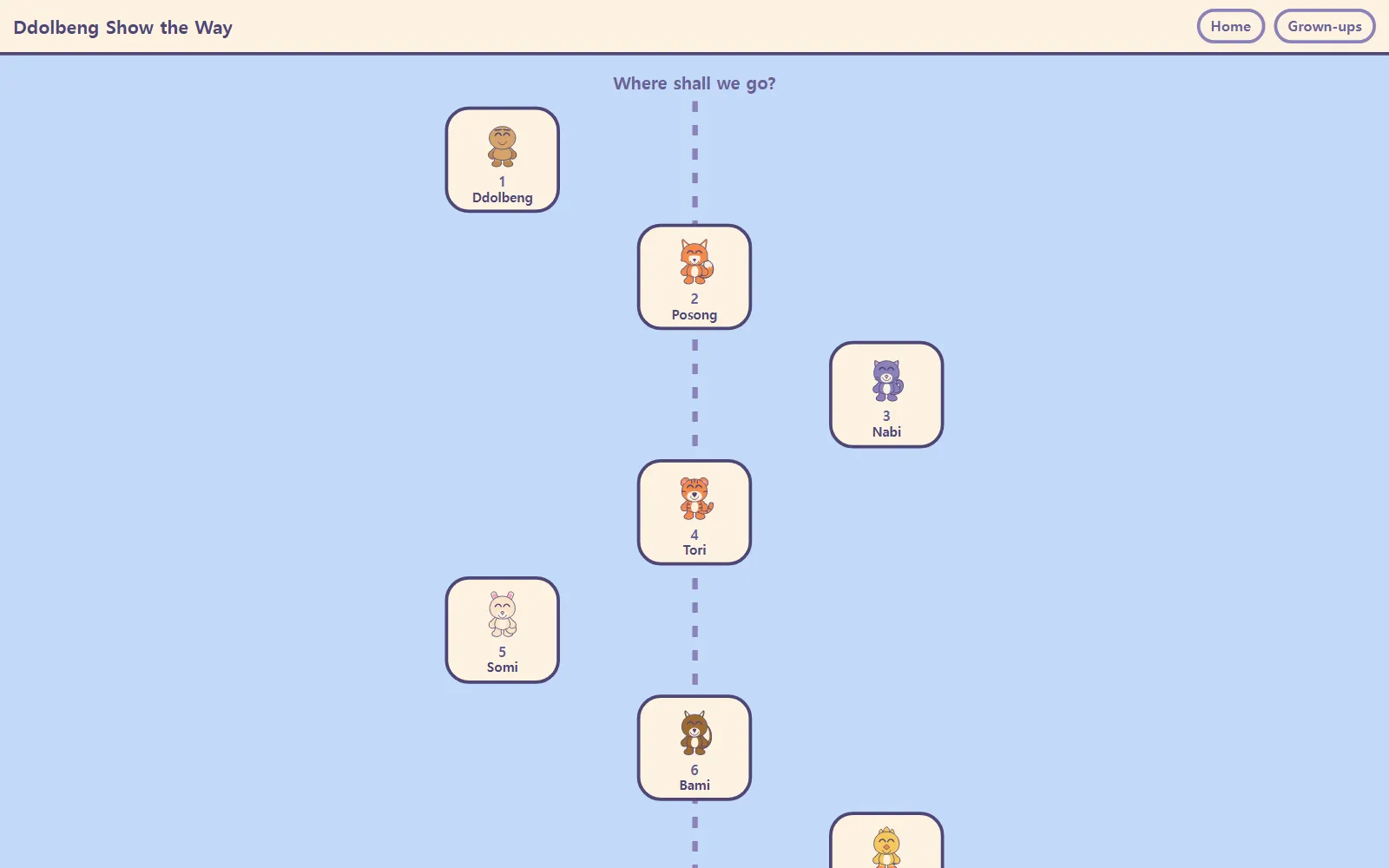
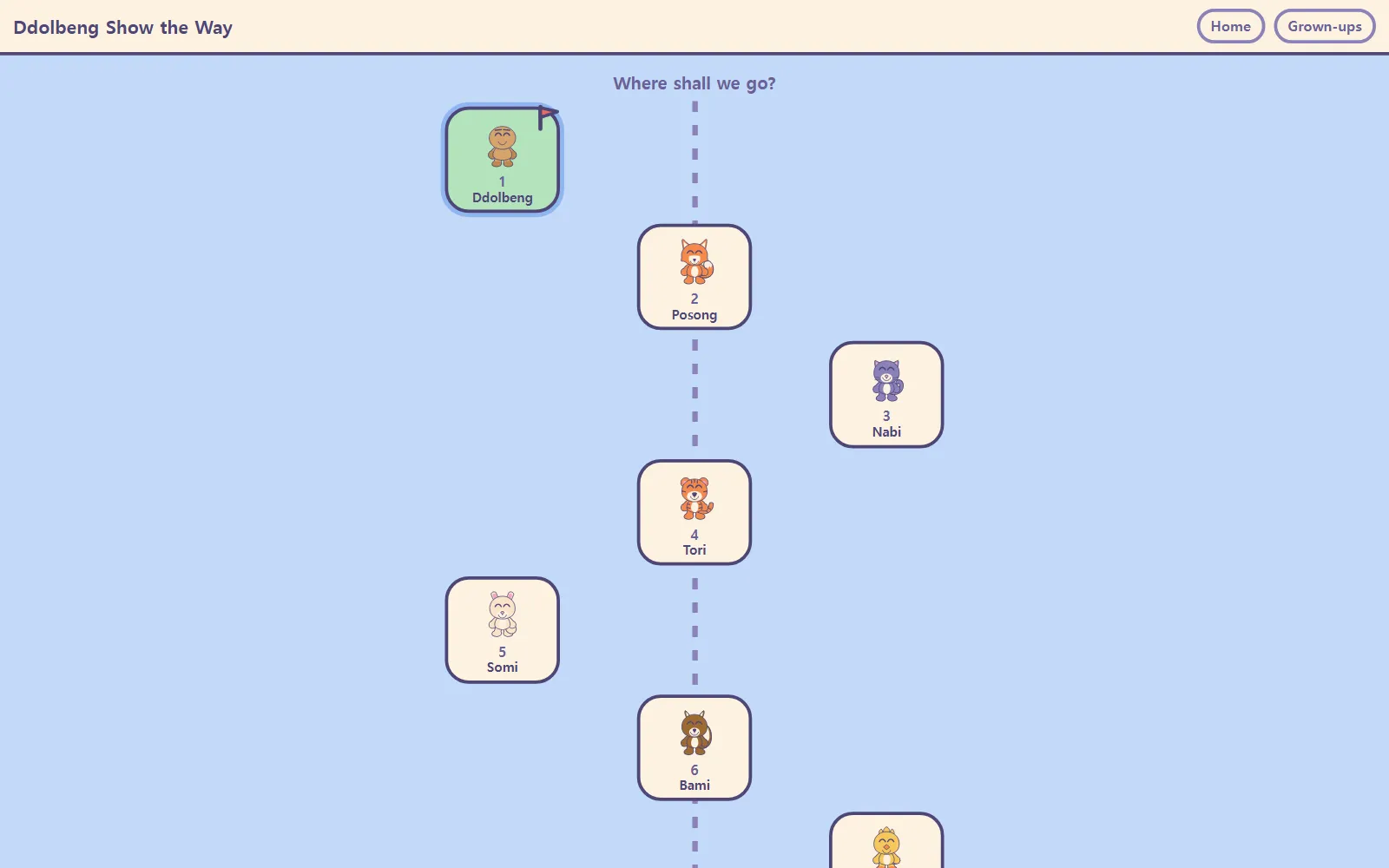
The map asks “Where shall we go?” Every stone on the trail shows the face of the friend on that board, so a child can pick “the one with the fox” without reading a number.
And every board is open from the start. A child who’s stuck on one board can try another and come back later.
The cards are arrows, with the word (up, down, left, right) underneath for children who are starting to read.
Board 1: three cards to the right
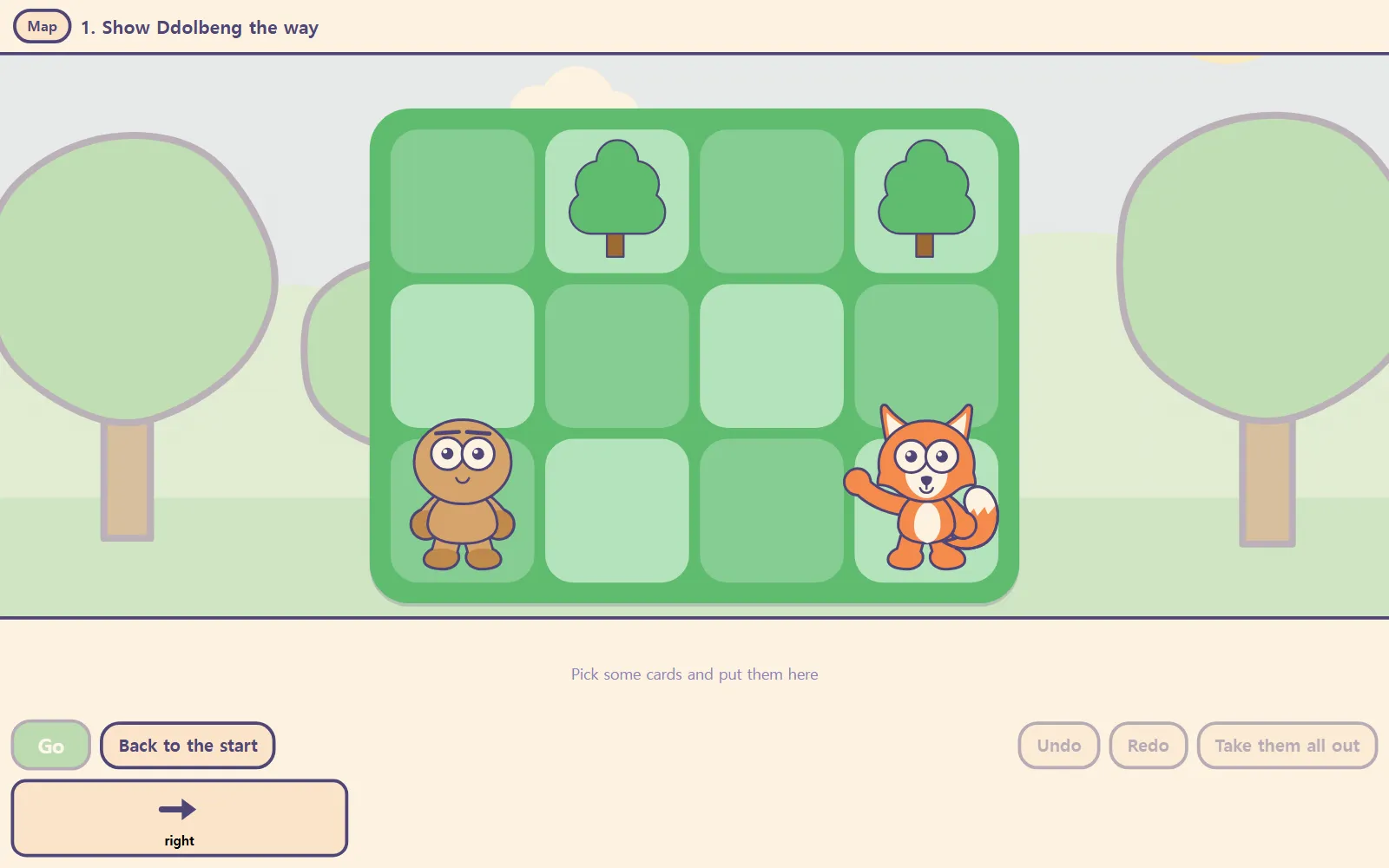
On the first board, Ddolbeng waits on the left and Posong waits at the far end of the same row. The drawer holds just one card: right.
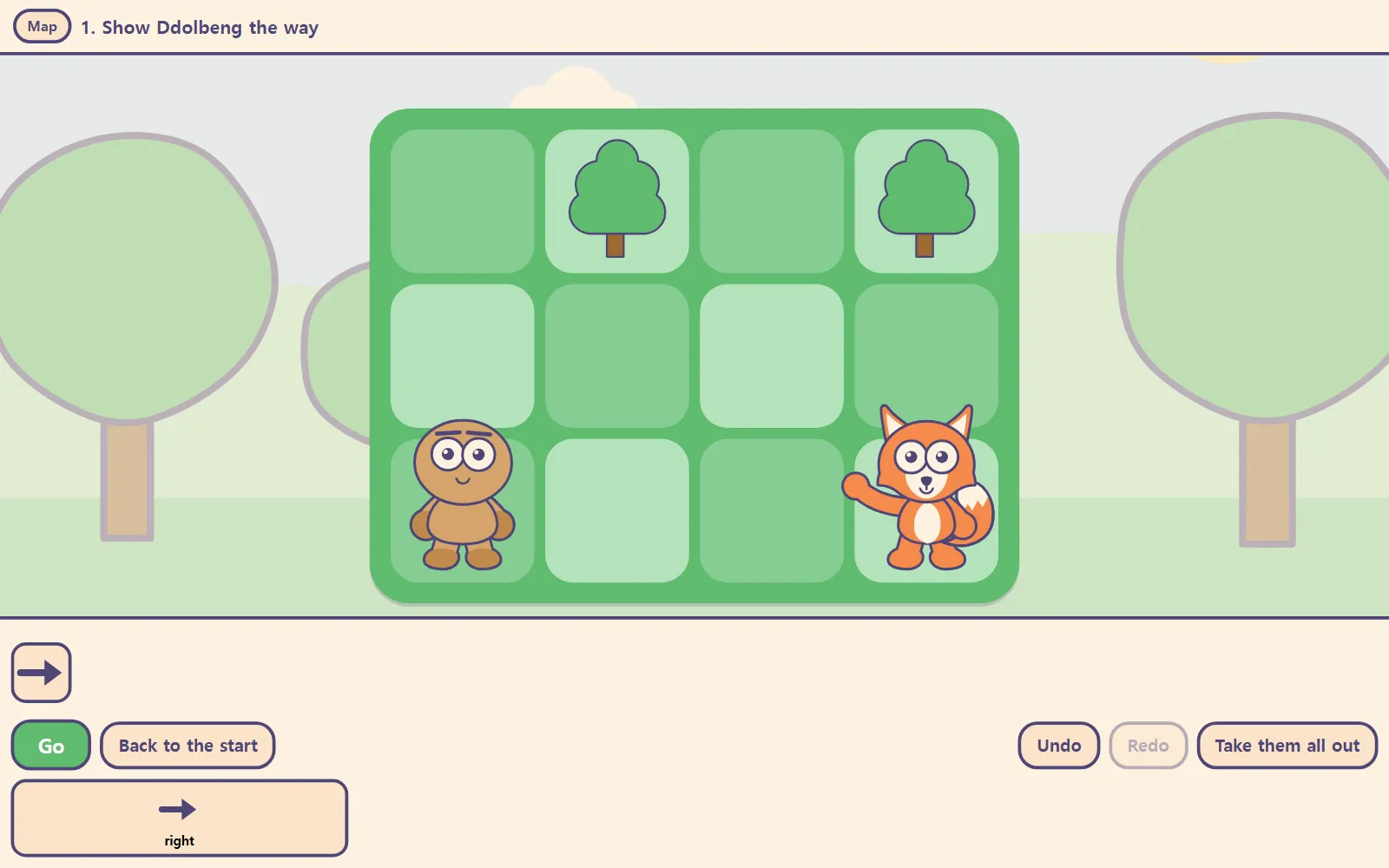
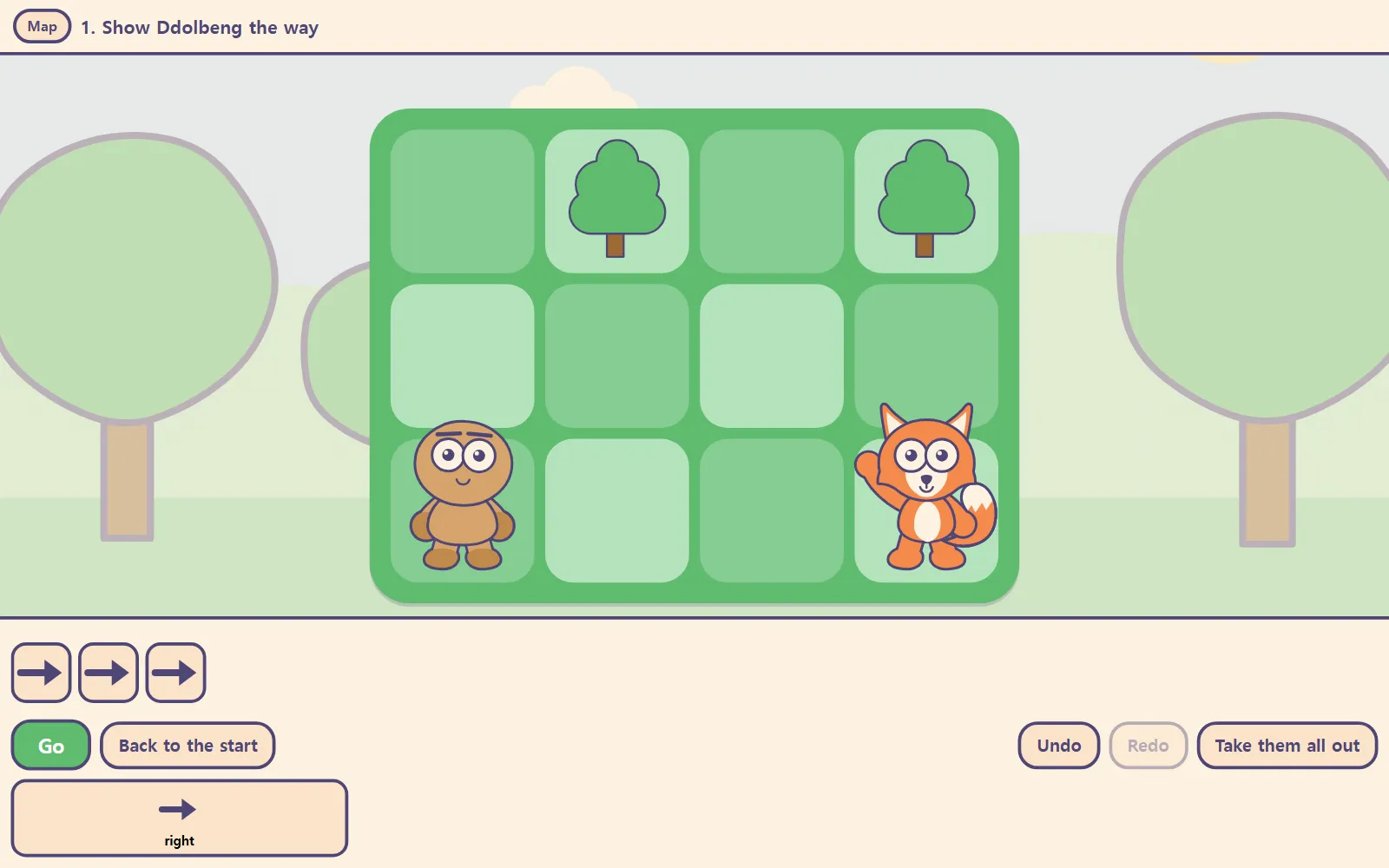
Notice what’s missing: there’s no “repeat three times” card. To go three squares, you lay three cards. That little choice gets children counting the squares themselves.
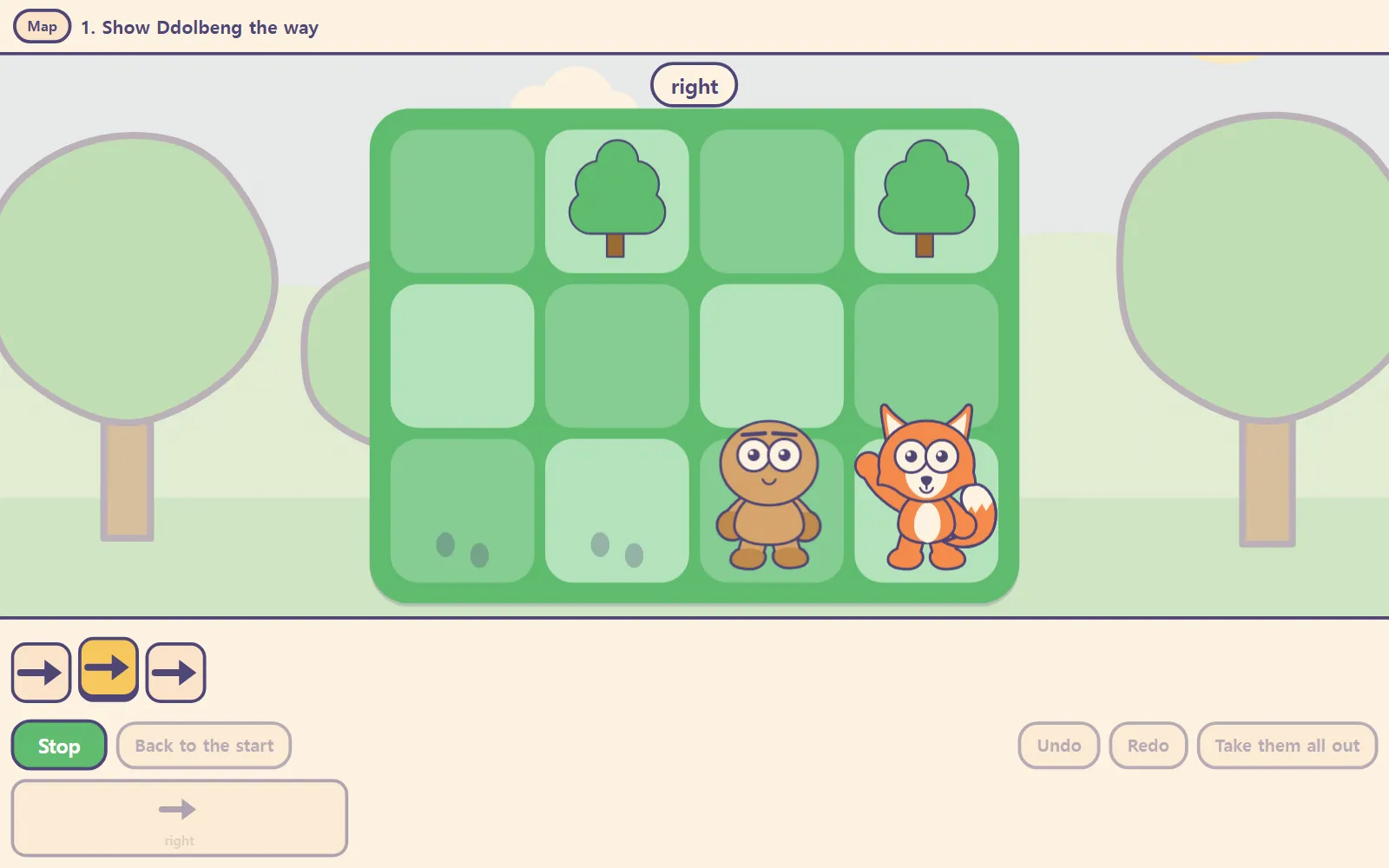
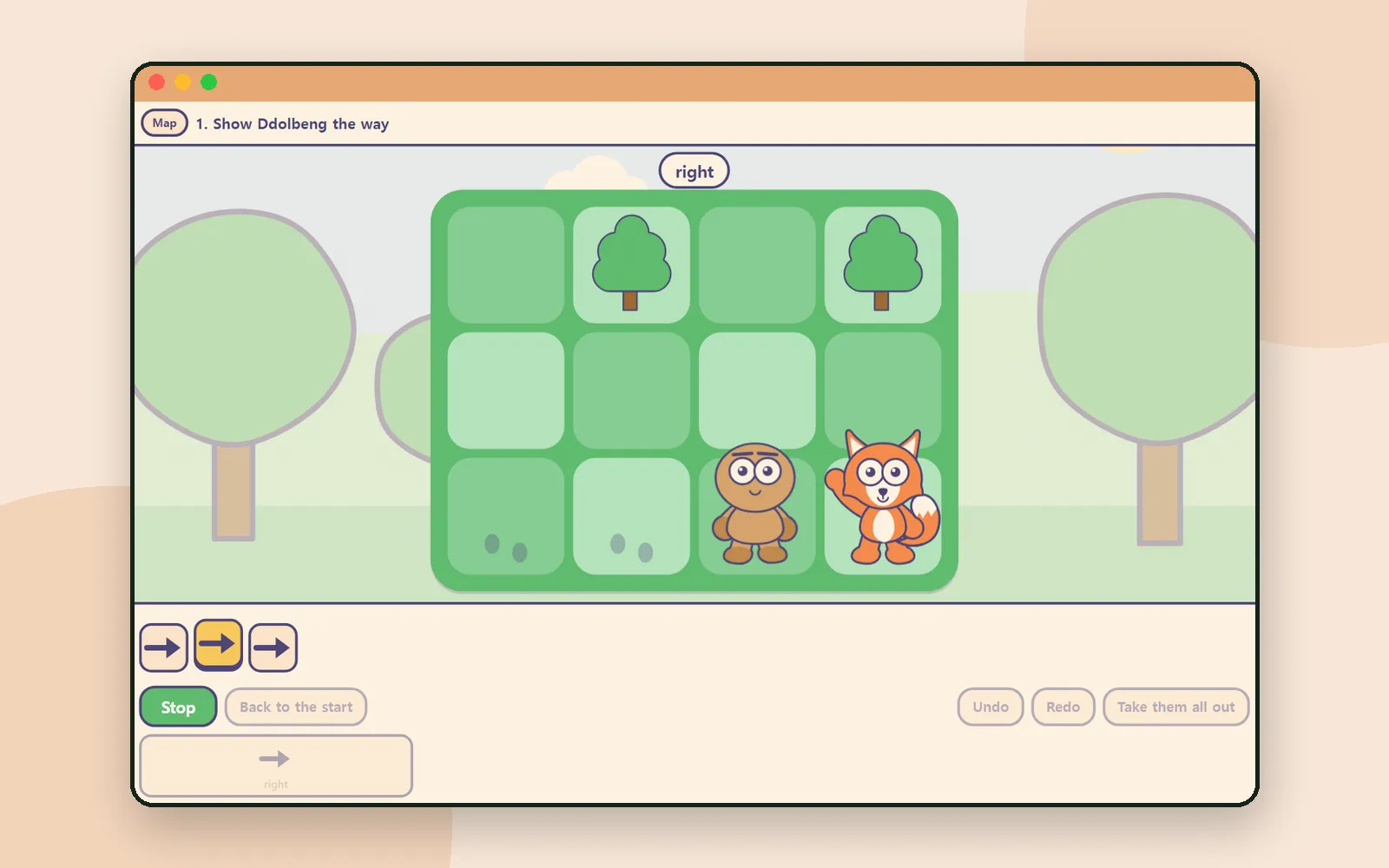
As Ddolbeng walks, the word for the step pops up over the board and footprints are left on the squares already crossed.
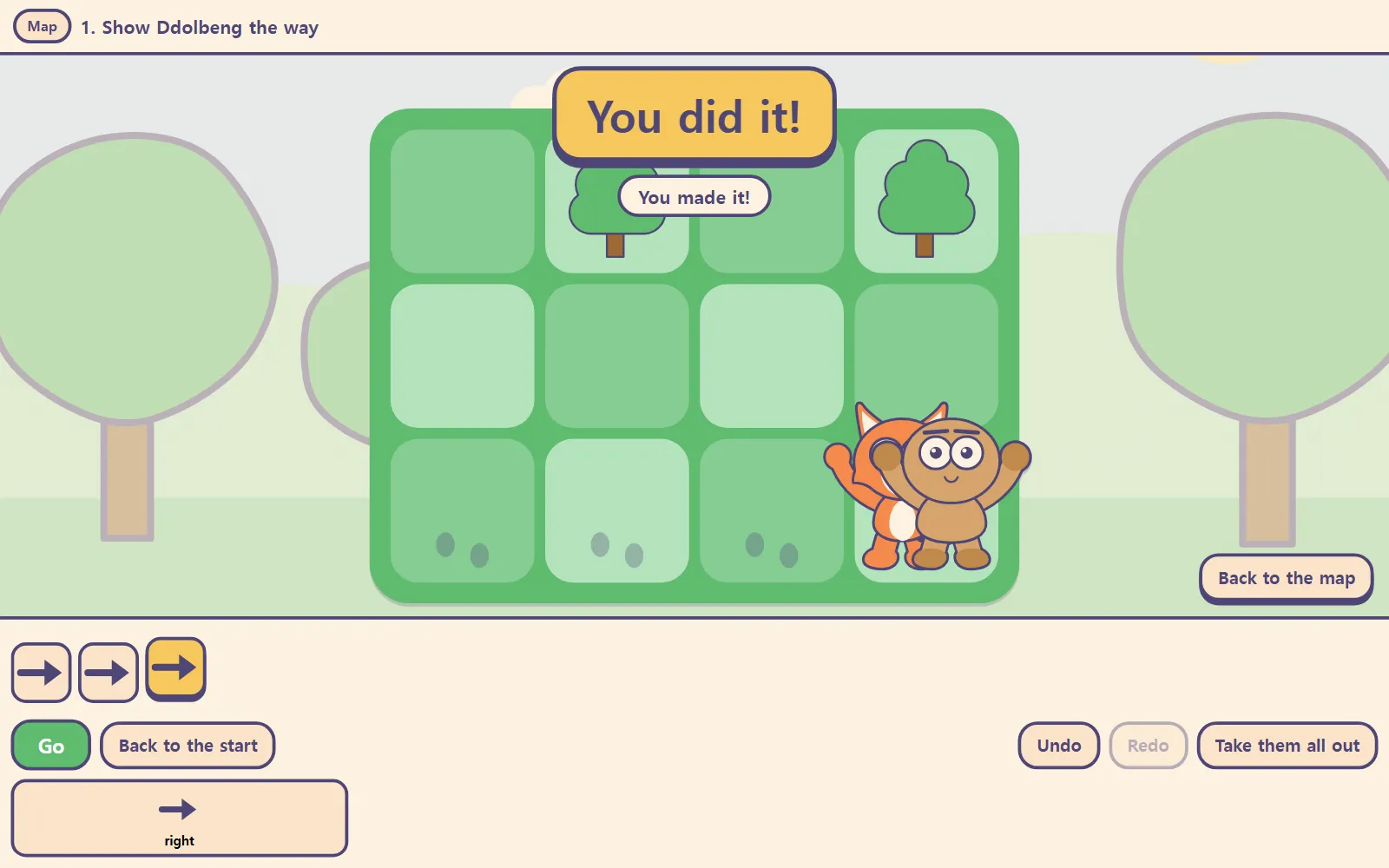
There are no stars and no score. Just the two of them cheering. Go Back to the map, and a flag is waiting on that stone.
Board 3: bumping into something
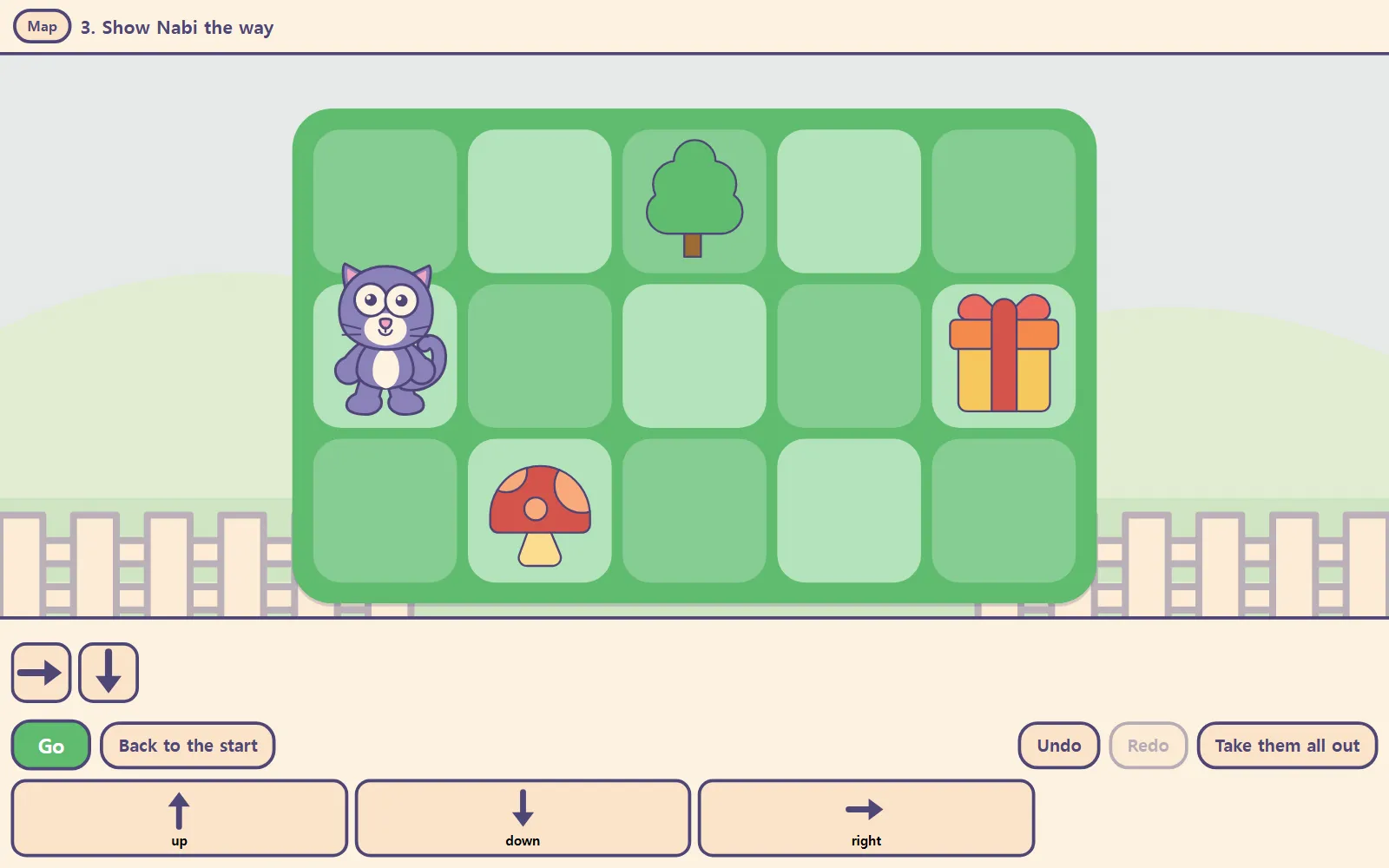
On board 3, Nabi is heading for a gift. Let’s try a plan on purpose: one right card, then one down card.
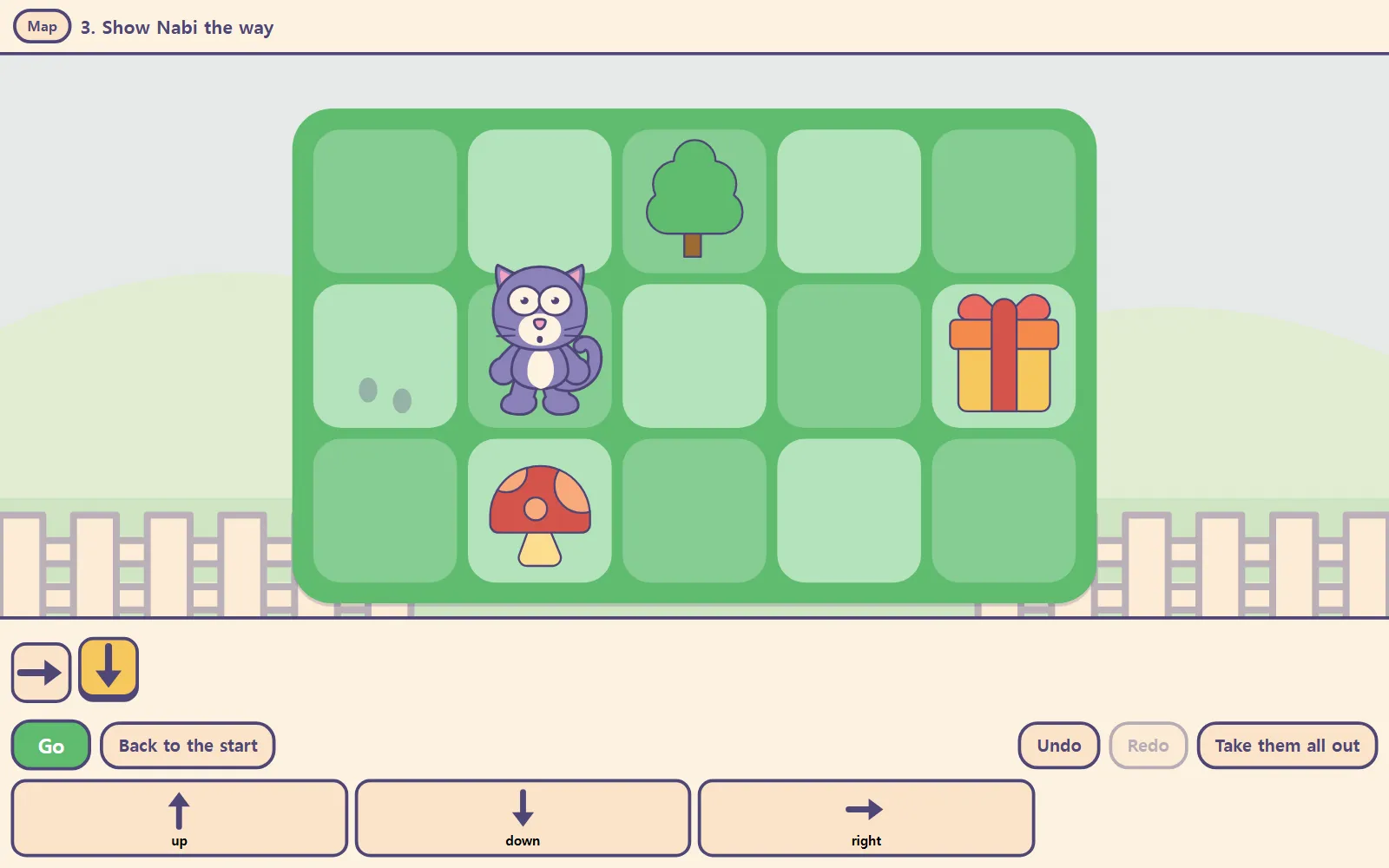
Nabi takes a step right, tries to go down, walks into the mushroom and stops, startled. That’s all that happens. There’s no buzzer, no red cross and no “try again” box, and the cards are still there.
So you look at which card it stopped on, tap that card to take it out, and press Back to the start to try a new plan.
Board 5: turning a corner
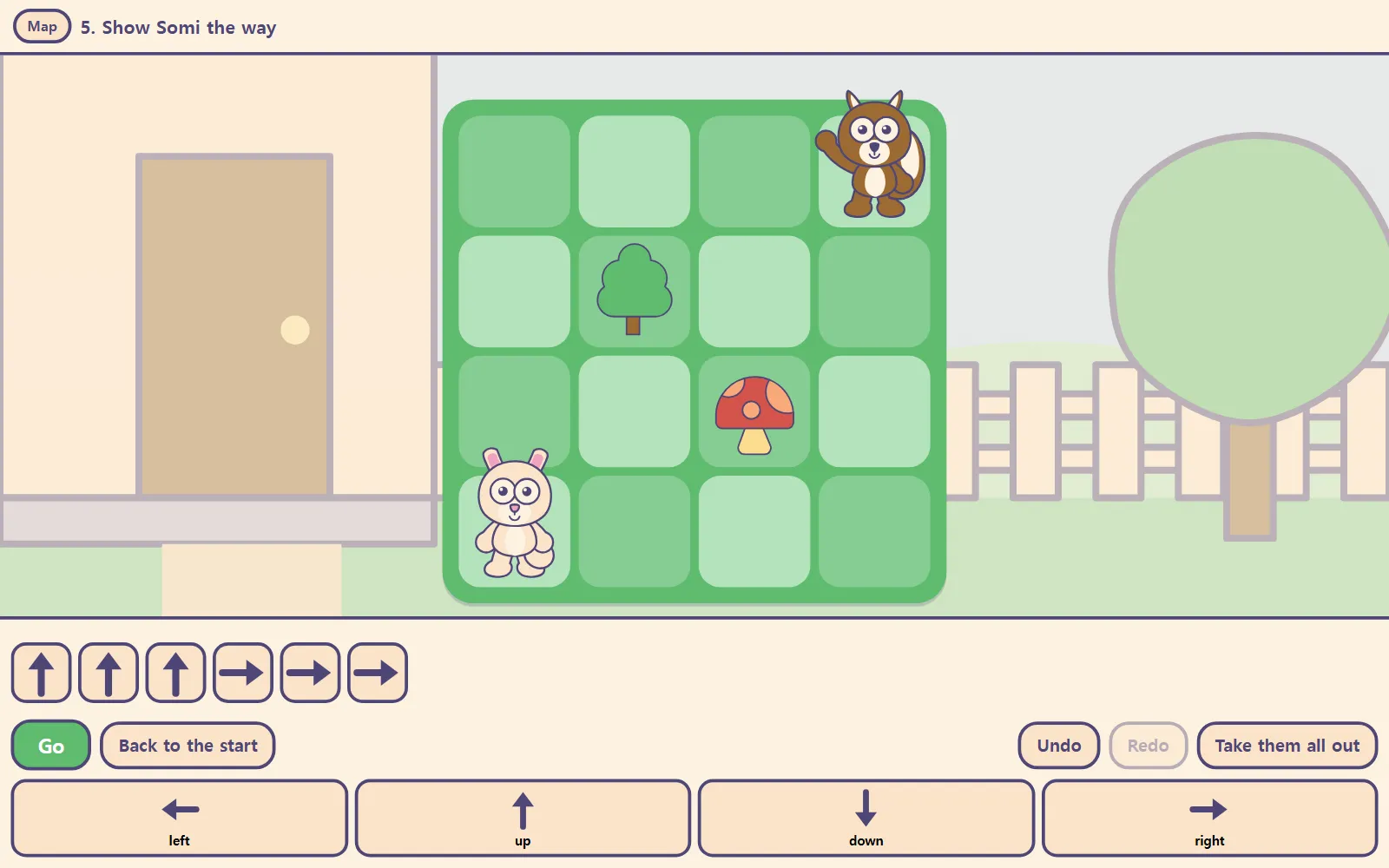
On board 5, Somi starts in the bottom-left corner and Bami waits in the top-right corner. This time the path has to turn.
Lay three up cards, then three right cards, and press Go. The cards light up one at a time as Somi follows the plan.
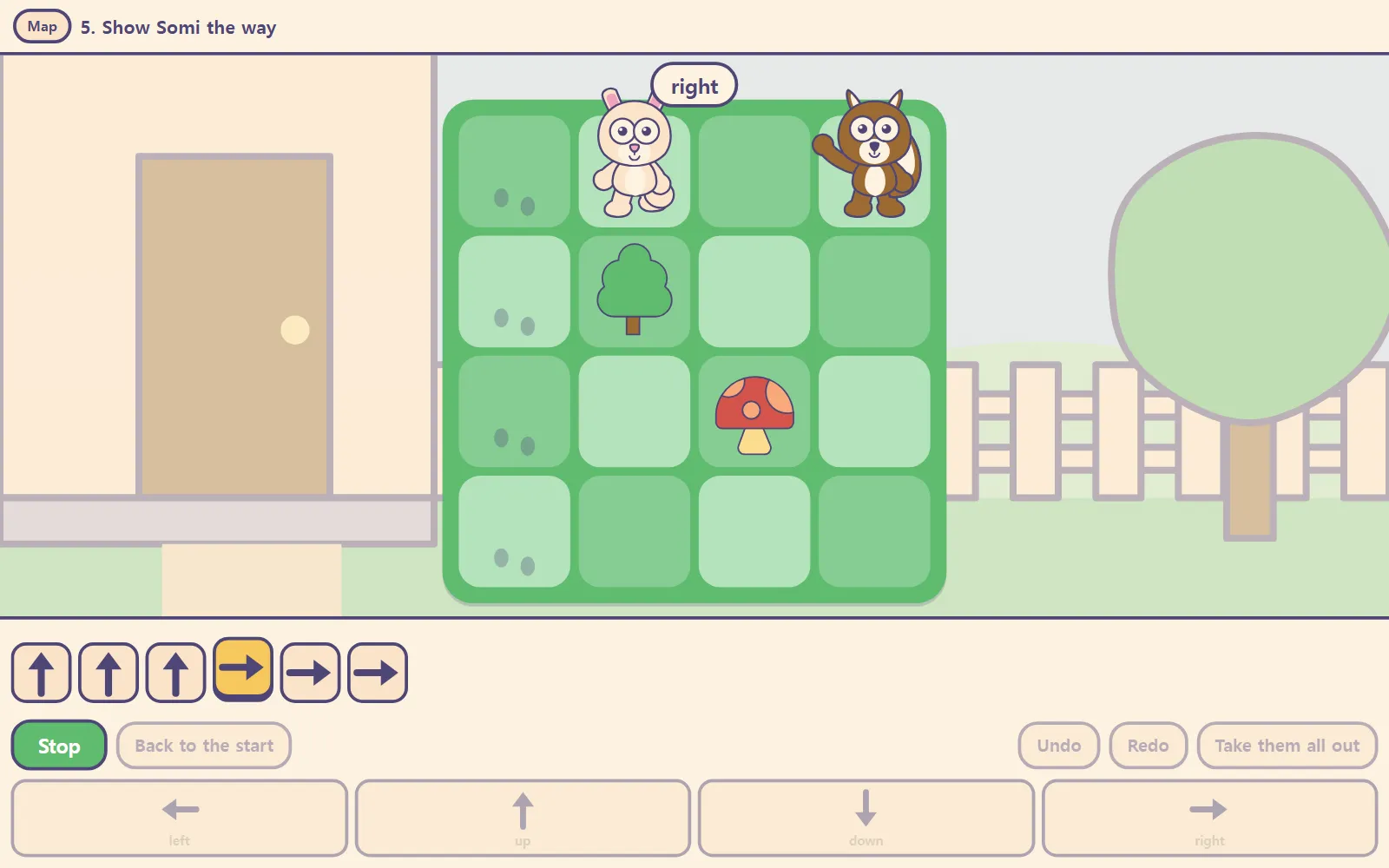
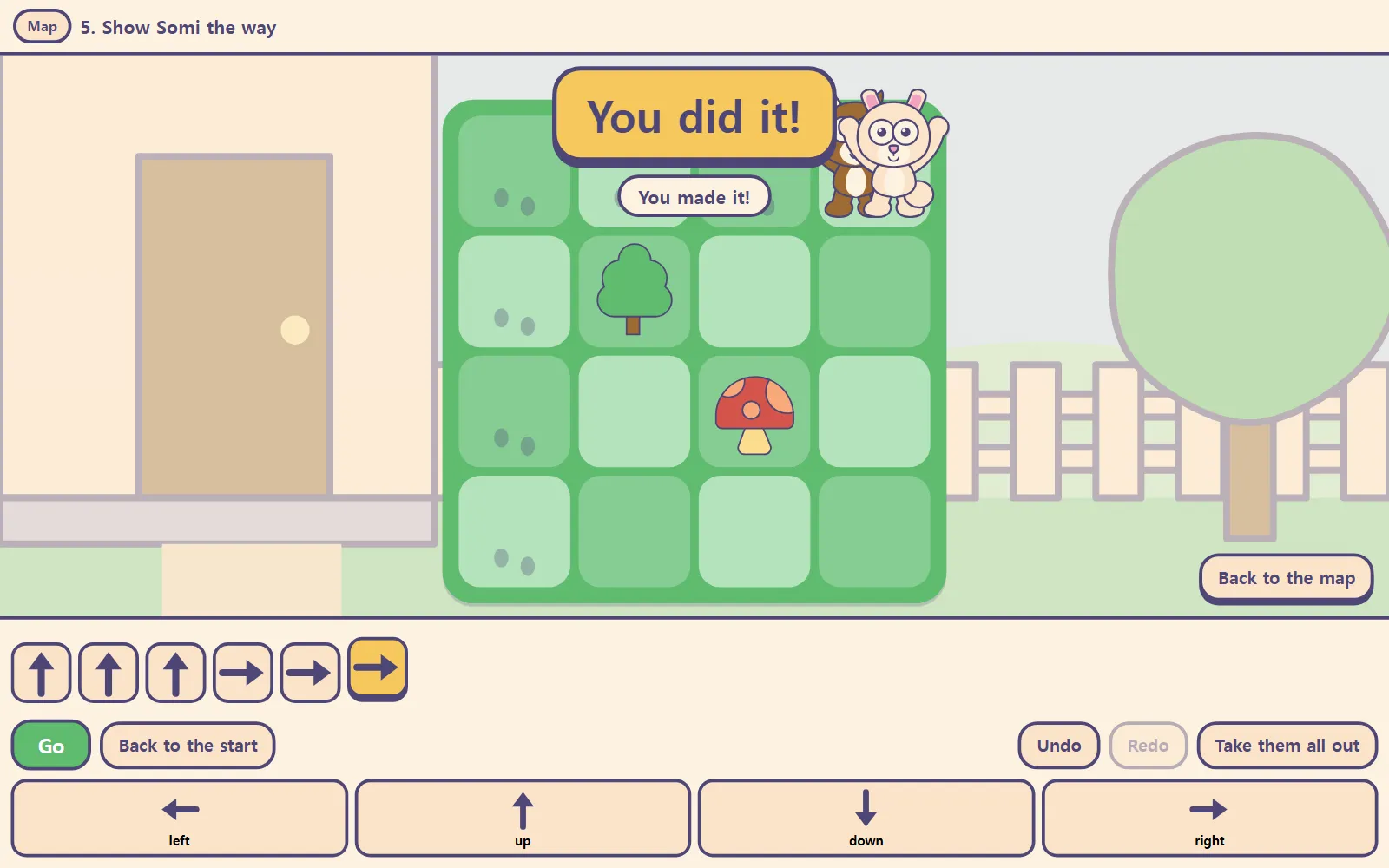
On this board, three right cards and then three up cards works too. It’s a lovely chance to show your child that there’s more than one right way.
Playing together at home or in class
- Count first. Before laying cards, ask “How many squares do we need?” and count them with a finger.
- Predict first. Before pressing Go, ask “Where will it stop?”
- Find the card. When the friend bumps into something, skip the answer and ask “Which card did it stop on?”
The next step: picture blocks
Its own page says a child who can put four arrows in an order and say what will happen is ready for picture blocks. When that happens, Scratch for Children 2 is a great next stop, and you can follow your first 30 minutes step by step.
Next time: AI Teading Teens, where older kids go all the way down to how AI sees, hears and learns.
Frequently asked questions
What does Ddolbeng Show the Way teach?
Sequence. A child lays out arrow cards in an order, predicts where the friend will go, and watches it happen one square at a time. Its own page puts it this way: what comes before block coding is not syntax, it is sequence.
My child can't read yet. Can they still play?
Yes. Each board on the map shows a friend's face, and the cards are arrows. The word for each direction sits under the arrow for children who are starting to read.
What happens when my child gets the cards wrong?
The friend walks into something, looks startled, and stops. There's no buzzer and no red cross, and the cards stay where they are, so your child can change one and press Go again.
Is there a repeat card?
No. To go three squares you lay three cards, so the child counts the squares.