Meet Ddolbeng and friends
A pebble, a fox, a puppy, a chick and many more. Meet the friends who show up across Ddolbeng, Scratch for Children 2 and AI Teading Kids.
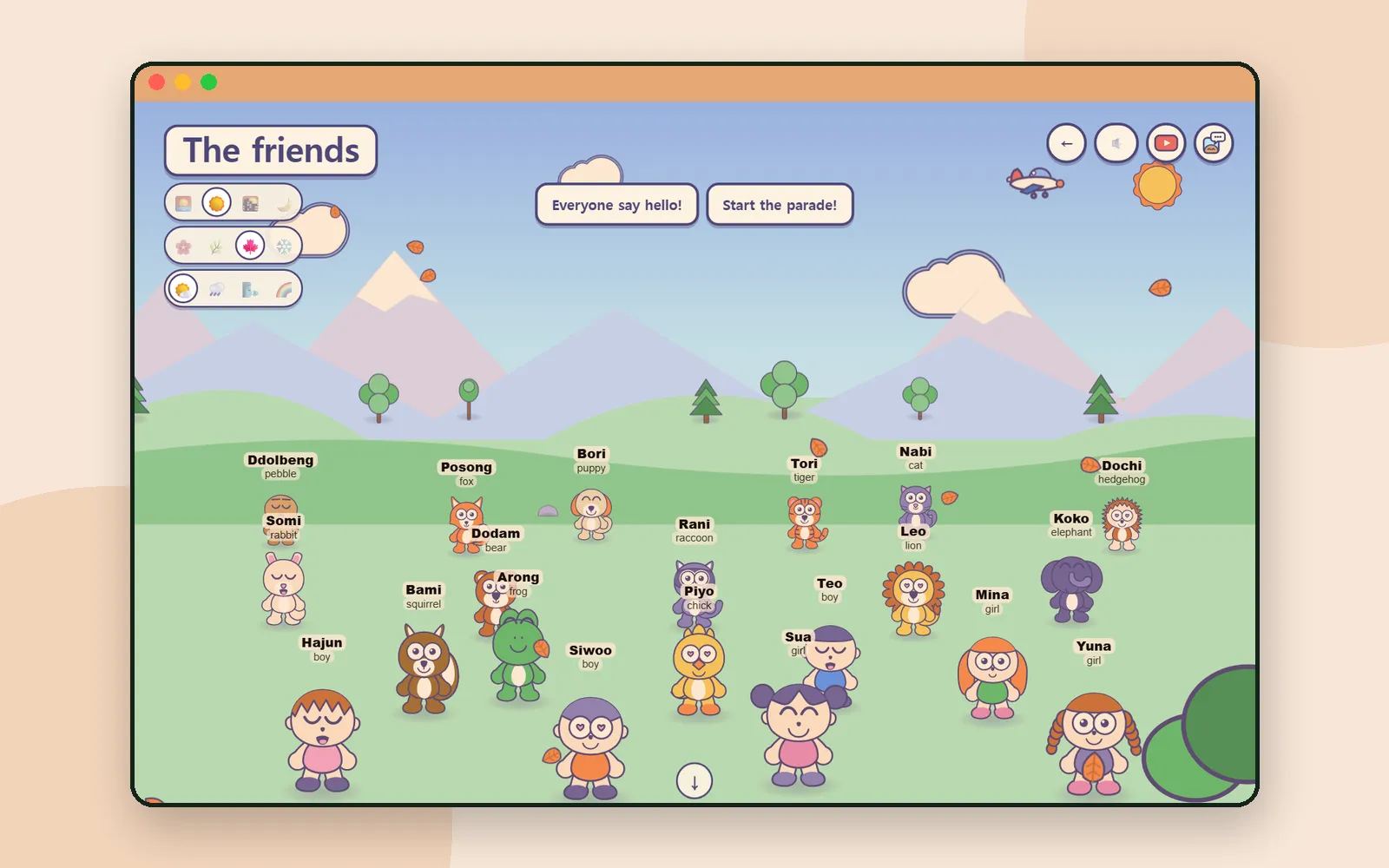
Every village needs its neighbours. In Ddolbeng, the neighbours are a whole crowd of friends, and chances are your child has already met a few of them.
Today let’s say hello properly: who they are, where to find them, and why the same faces keep turning up across our apps. 👋
The friends square
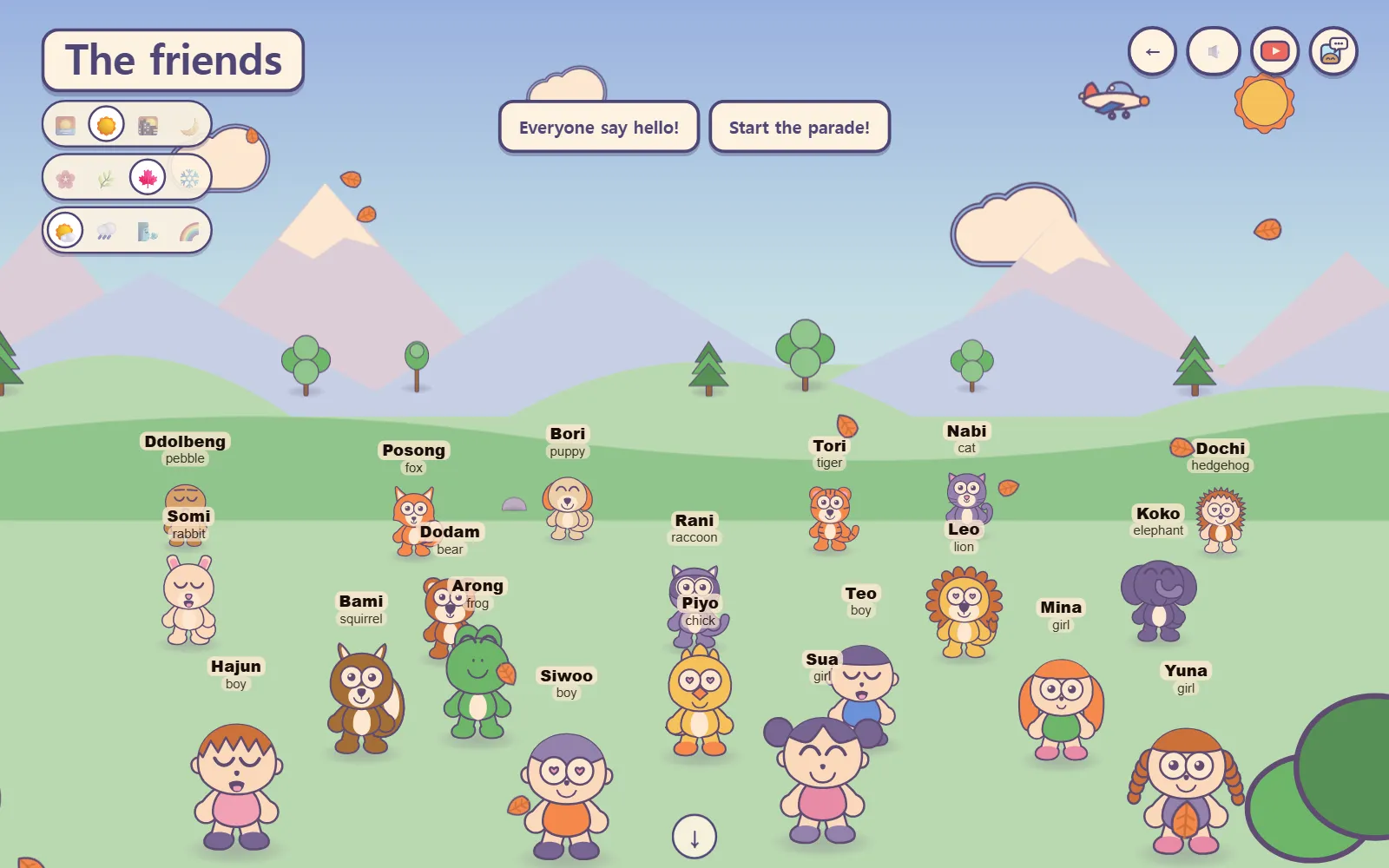
On Ddolbeng’s The friends page, everyone gathers on one grassy square. Each friend wears a little label with their name and what kind of animal they are.
The page greets you with a question: “Who shall we say hello to first?” Press Everyone say hello! and they all wave at once, or press Start the parade! and watch them dance.
CodingTeading appDdolbengPlay for little onesTap a friend to meet them
Tap any friend and a card opens with their face, their name, what they are, and one line about them. Arrows on the card let you visit the next friend, and tapping the face says hello.
Here are three friends to start with.
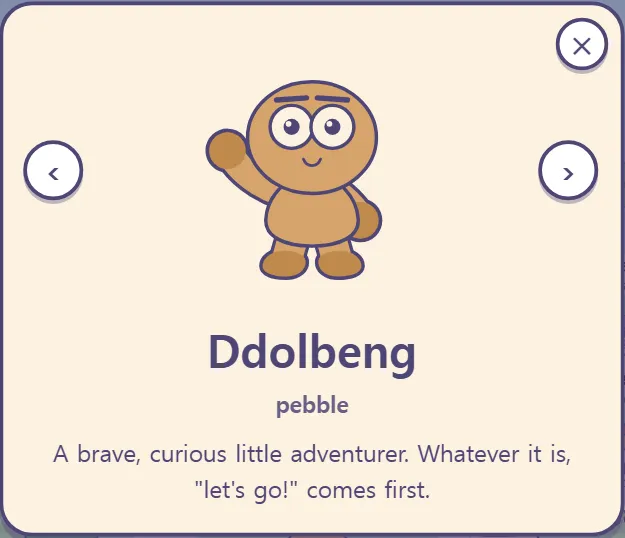
Ddolbeng is a little pebble, and the one the whole playground is named after. Its card sums it up: whatever it is, “let’s go!” comes first.
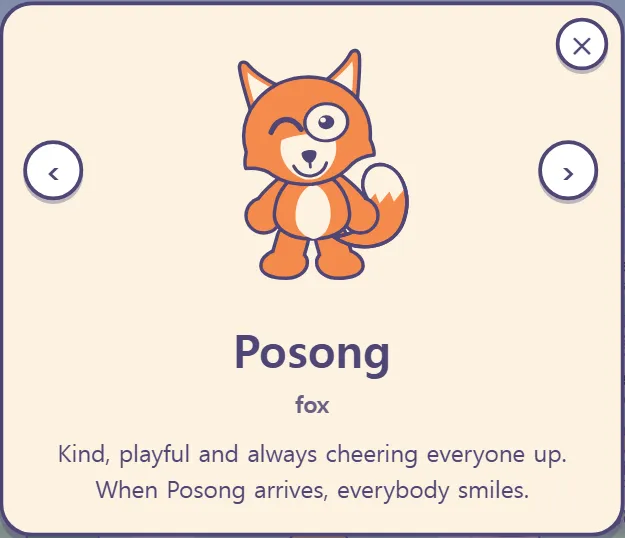
Posong is a fox. Kind and playful, and according to the card, when Posong arrives, everybody smiles.
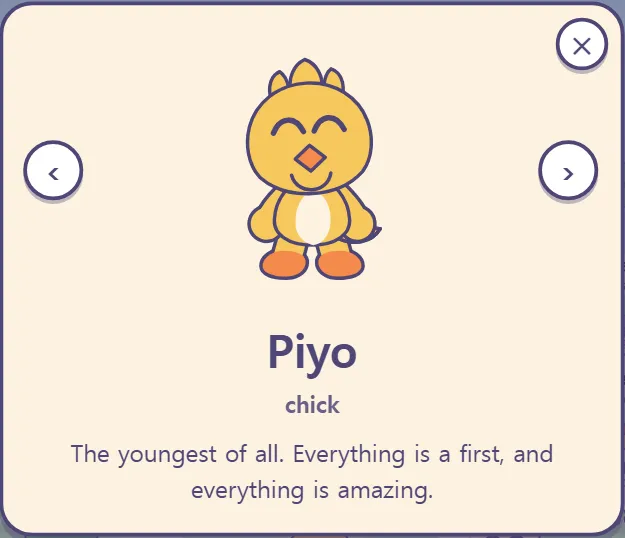
Piyo is a chick and the youngest of all. For Piyo, everything is a first, and everything is amazing.
A few more faces
The square has many more friends to meet. A few you’ll spot right away:
- Bori, a puppy: one kind word and that tail won’t stop wagging
- Tori, a tiger: acts like the fearless boss of the street, but is really a big softie
- Nabi, a cat: pretends not to care, then quietly comes and sits beside you
- Somi, a rabbit: easily scared, but far too curious to stay away
- Koko, an elephant: a gentle giant who walks carefully and remembers everything
There are human friends too, living right alongside the animals.
Same names in every language
The friends page makes a small promise to children who live between languages: “Their names stay the same in every language.”
Posong is Posong in English and Spanish. In Japanese the name is written ポソン, and in Korean 뽀송, but it sounds the same. So a child who switches the page to another language meets exactly the same friends.
Where else you’ll meet them
The friends don’t stay in the village. You’ll find them across our apps:
- In the Ddolbeng games. The same friends turn up game after game, so a new game never feels like a stranger’s house. In Ddolbeng Show the Way, for example, kids lay out cards to walk Ddolbeng to Posong.
- In Scratch for Children 2. Kids put the friends on the stage and make them walk, talk and change faces. Our first 30 minutes post brings Posong onto the stage.
- In AI Teading Kids. A small picture machine learned from pictures of the friends, and kids watch it draw them. Because it was only shown those friends, it can’t draw a dog or a car. Read more in AI Teading Kids.
Coming up next
Want to see all of our apps? Head back to Meet CodingTeading.
Next time we switch to the grown-ups’ shelf: Aha AI, a dictionary that explains each AI term with one everyday comparison.
Frequently asked questions
What kind of creature is Ddolbeng?
A pebble. Its card on the friends page calls Ddolbeng a brave, curious little adventurer, and says that whatever it is, "let's go!" comes first.
Do the friends have different names in other languages?
No. The friends page says their names stay the same in every language. Only the script changes, for example ドルベン in Japanese and 똘뱅 in Korean.
Where else do the friends appear?
In the Ddolbeng games, in Scratch for Children 2, where kids put them on the stage, and in AI Teading Kids, where a small picture machine learned to draw them.