Aha AI: one everyday analogy for every AI term
What's a token? A transformer? Aha AI explains each AI term with one everyday analogy, then points you to a tool to try it. Here's how a term page works.
“What’s a token, anyway?”
It’s the kind of question that stops a lesson in its tracks. You know roughly what it means, but explaining it to a class, or to your own teenager, is another matter.
That’s the moment Aha AI was made for. It’s a dictionary of AI terms where every term is unlocked by one everyday analogy. Let’s look up a couple of words together. 💡
What is Aha AI?
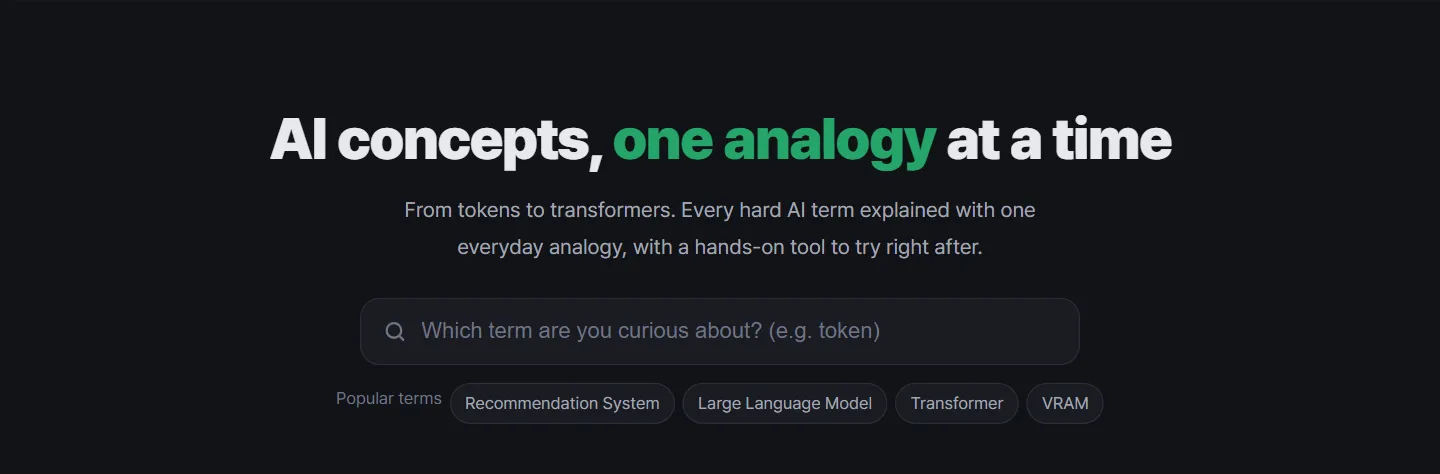
Aha AI is a dictionary that explains hard AI concepts through one everyday analogy each. It covers hundreds of terms, from tokens to transformers, and it’s written for readers with no math or programming background, and with no formulas.
You can search for a term, browse by category (AI basics, language models, generative AI and more), or press Random to land on a surprise.
CodingTeading appAha AIA dictionary of AI termsA term page, top to bottom
Every term page follows the same order, so you always know where to look:
More precisely is our favourite part. An analogy is a shortcut, and every shortcut skips something. Aha AI tells you exactly what it skipped.
Example: the token and the sandwich
Nobody eats a foot-long sub sandwich in one bite. You slice it into pieces small enough to chew. According to Aha AI, an AI reads text the same way: it cuts the text into bite-size pieces first, and each piece is a token.
The analogy keeps going. The slices aren’t even: a word the AI has met a million times comes off as one fat piece, while an unusual word gets cut thin, into several. And the plate only holds so many pieces, which is why a long conversation can push the earliest pieces off the edge.
Example: the transformer and the round table
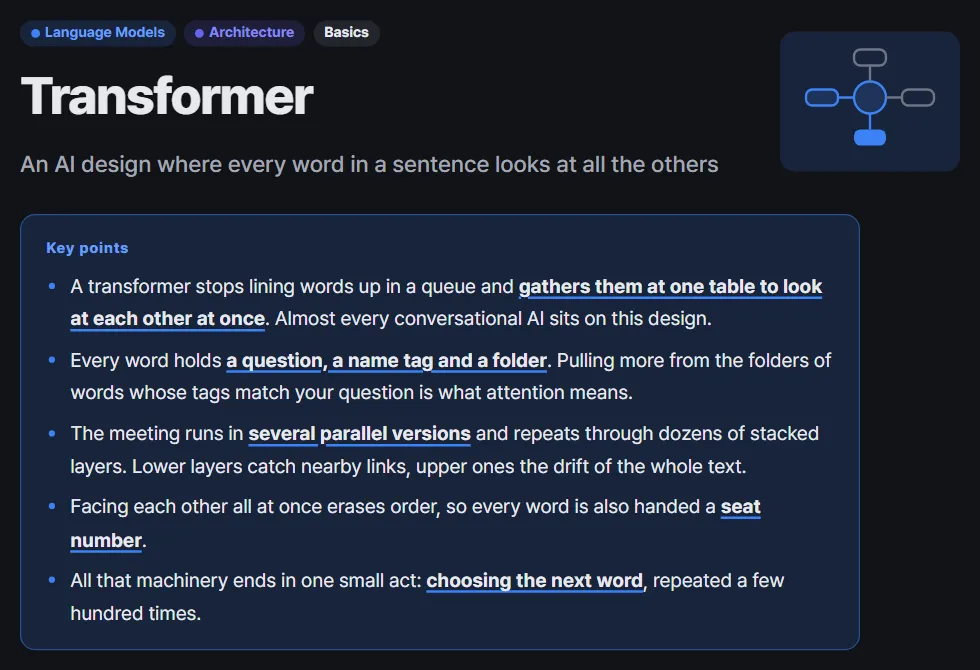
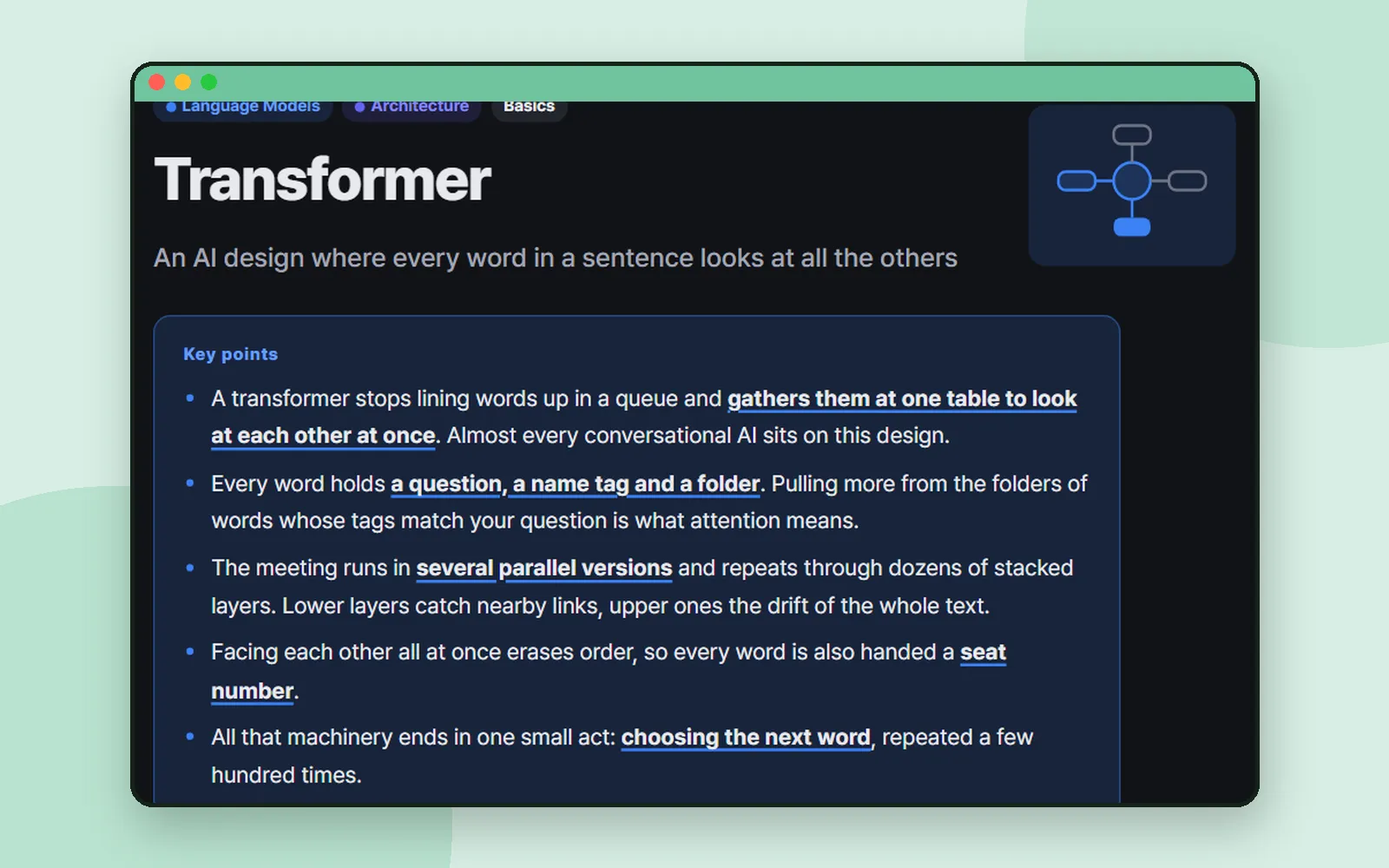
The transformer is one of the hardest terms to explain. Aha AI sits the words of a sentence at a round table.
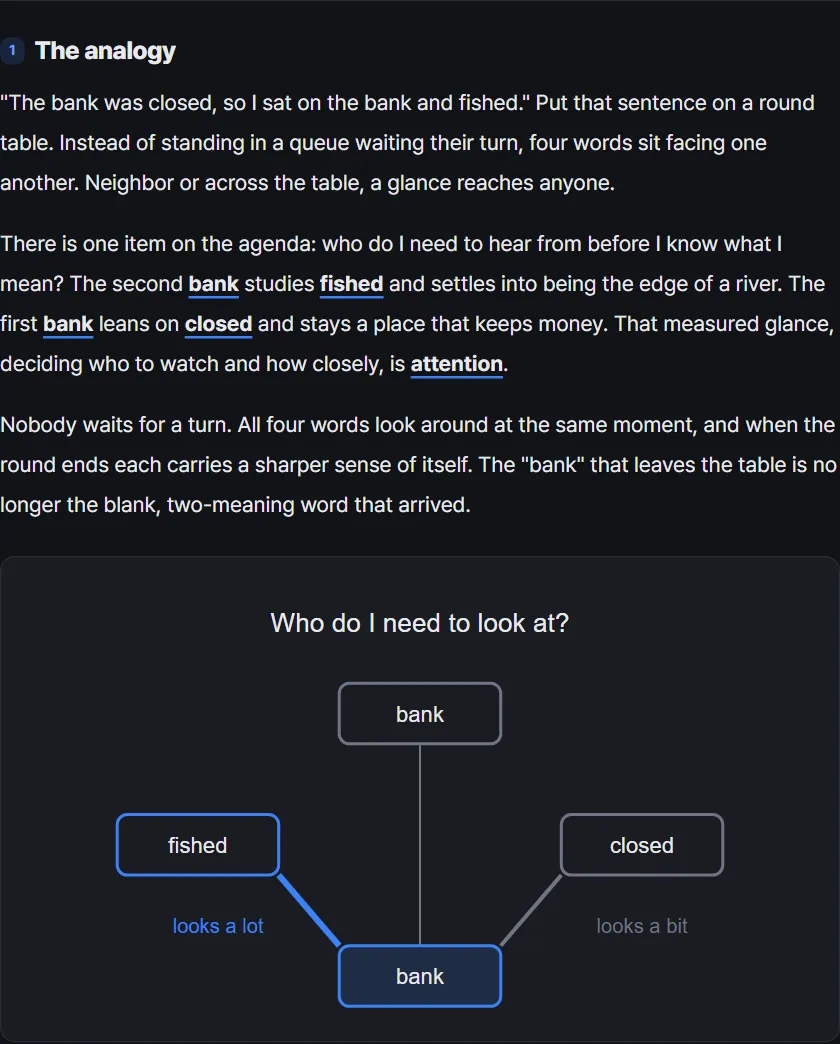
In English, the example is “The bank was closed, so I sat on the bank and fished.” Instead of waiting in a queue, the words all face each other. The second bank looks at fished and realizes it’s the edge of a river. The first bank looks at closed and stays a place that keeps money. That measured glance, deciding who to watch and how closely, is attention.
Read it, then try it
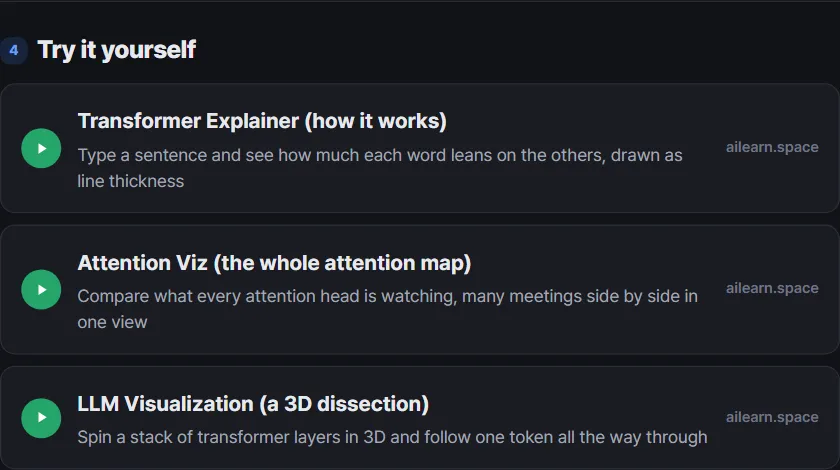
Aha AI is a sister site of AI Teading, and each term links to a tool where that concept becomes visible. On the transformer page, for example, you can type a sentence and see how much each word leans on the others.
So a student can read the analogy, then go poke at the real thing a minute later.
For teachers
- Search in the moment. When a student asks about a term, look it up together and read the analogy out loud.
- Use More precisely as a discussion. Ask the class: where does this analogy break? Then compare with the page.
- Suggest a better analogy. Every term page has a Suggest an edit link. If your class comes up with a better comparison, send it in.
That’s the first ten!
With this post, we’ve walked through the first stretch of our apps together, from Meet CodingTeading to picture blocks, a village of games, AI you learn by pressing, and a dictionary for grown-ups.
If you teach with AI, you might also like the prompts in Prompt Workshop, filled in and ready to copy. Thanks for reading, and see you in the next post!
Frequently asked questions
Who is Aha AI for?
Its About page says teenagers through adults meeting AI for the first time, plus teachers who need to explain a concept in class, first-year students and people starting out at work. There's no math or programming background needed.
Are there formulas?
No. Aha AI explains each concept with one everyday analogy and no formulas. Where the analogy stops matching reality, a section called More precisely says so.
Is it only in English?
No. Aha AI is available in Korean, Japanese, English and Spanish, with analogies chosen separately for each language.
Can I suggest a better analogy?
Yes. Every term page has a Suggest an edit link for errors or better analogies.