Byeolmuri: learn the night sky, then go outside and find it
In Byeolmuri the sky on screen is the real sky where you are, and it moves as you read. Here's how a lesson works, from a half Moon to going outside.
You learn a constellation from a book or a video. Then you step outside that night, look up, and… where was it again?
Byeolmuri was made for exactly that moment. Its first page says it plainly: read the explanation, then check it in the sky right above. Let’s open a lesson together and follow it all the way outside. 🌙
What is Byeolmuri?
Byeolmuri is a site for learning the night sky. What makes it different is simple: the sky on screen is the real sky where you are, so whatever you learn, you can go outside and find that same night.
Each lesson has the sky on one side and the explanation on the other. Every time you move on a step, the sky moves with the text: the date, the time and the direction change, and the star being talked about gets marked. It’s a bit like listening to a guide at an observatory who turns the dome as they talk. And unlike a video, you can still drag the sky, zoom in and tap other stars while you read.
Pick a lesson
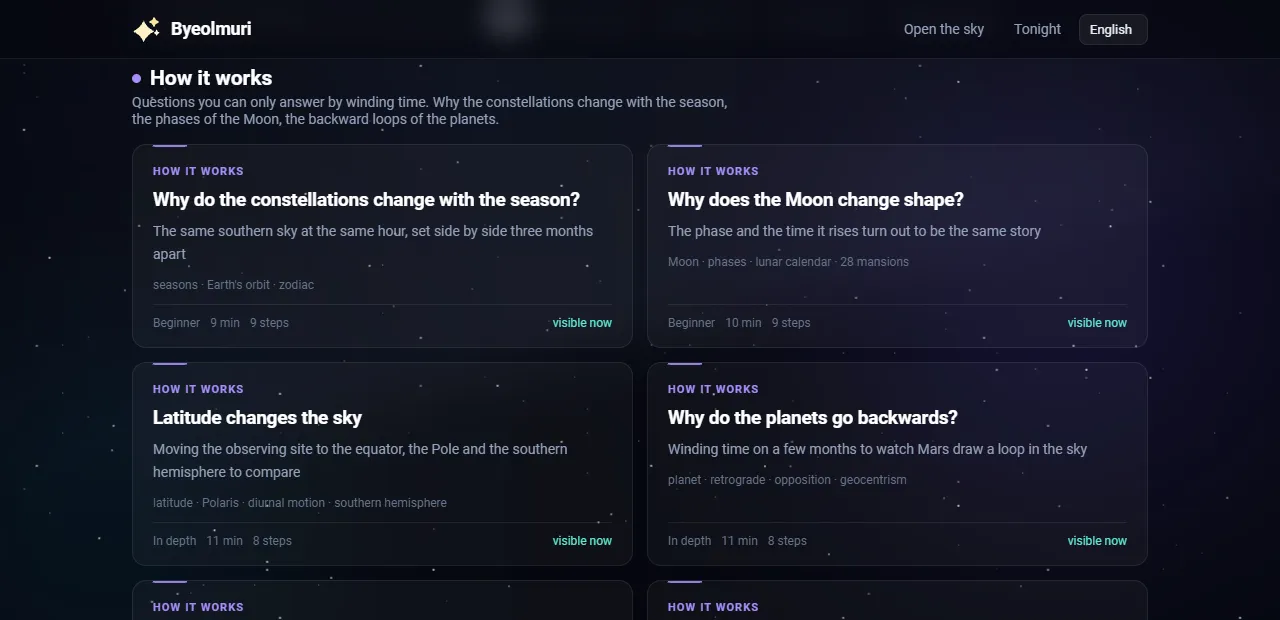
Press Browse lessons and you’ll first see Visible tonight: lessons that suit the sky at this time of year. Below that, All lessons are grouped into three tracks:
- How it works: why the sky looks the way it does, like why the Moon changes shape
- What to find: where to point your eyes, like the Big Dipper or the Andromeda Galaxy
- How we know: how people worked things out, like how bright or how far away a star is
Each card shows the level, how many minutes it takes and whether it’s visible now. Press Visible now only to keep just the ones you can go and look at.
Open one: “Why does the Moon change shape?”
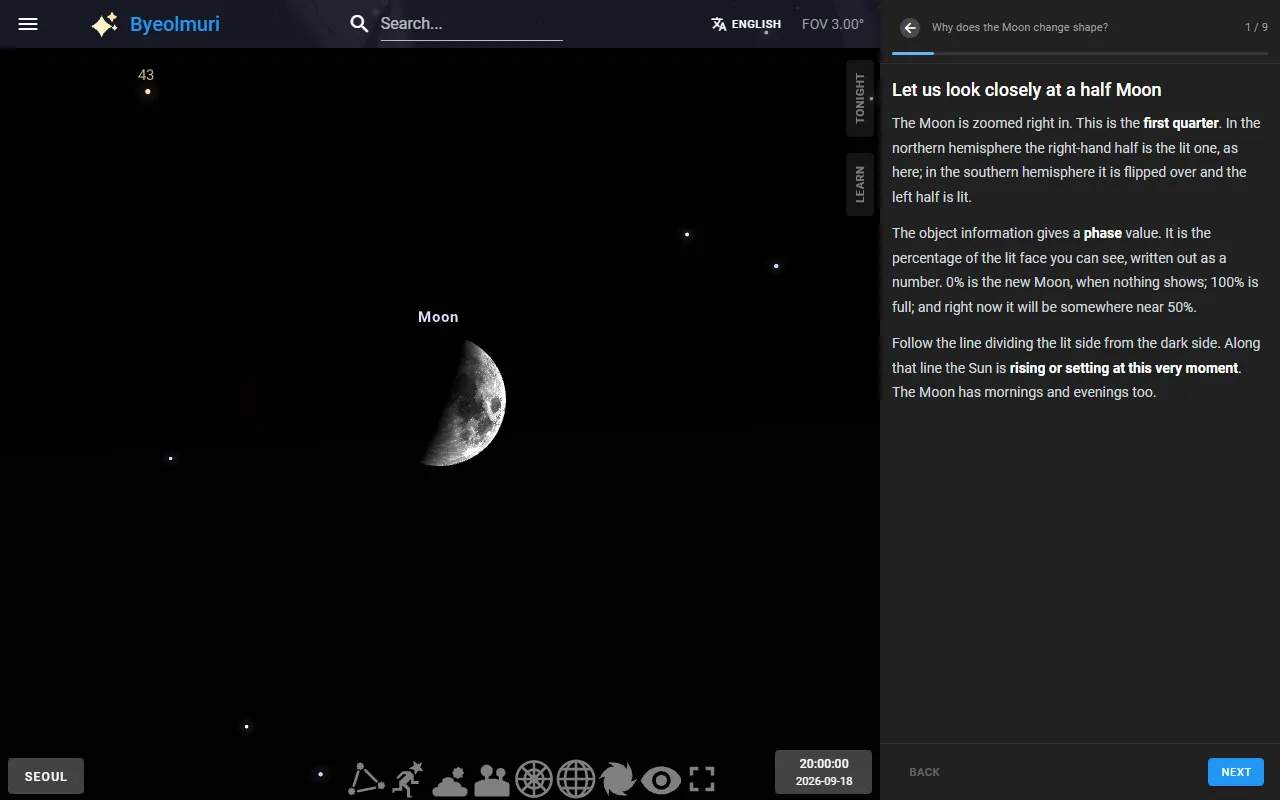
We picked the Moon because it’s the easiest thing to check. Open the lesson and the first step zooms right in on a half Moon.
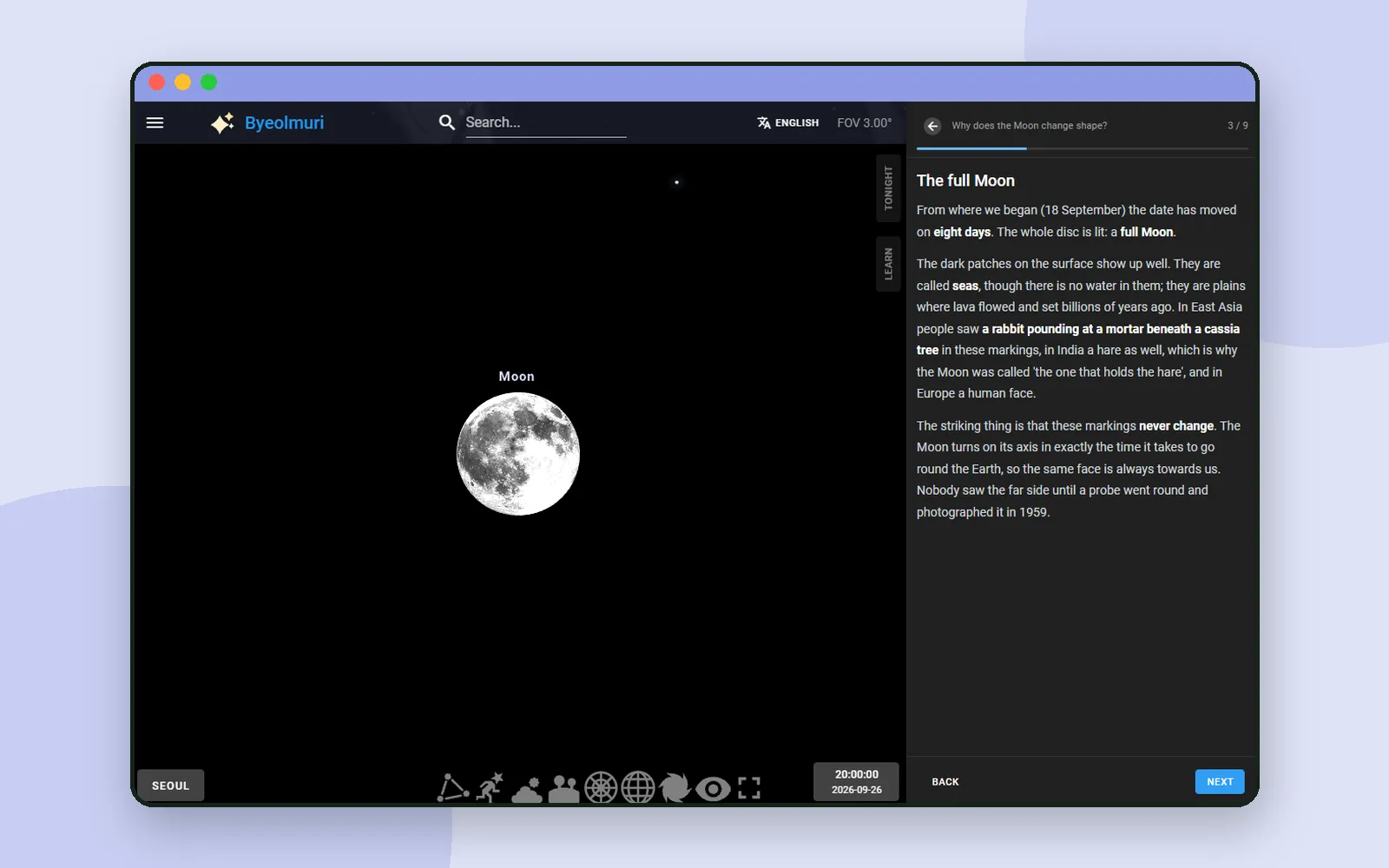
Press Next, and only the date moves. The half Moon becomes a thin crescent, then the whole disc fills in as a full Moon. You don’t read about the phases changing, you watch them change.
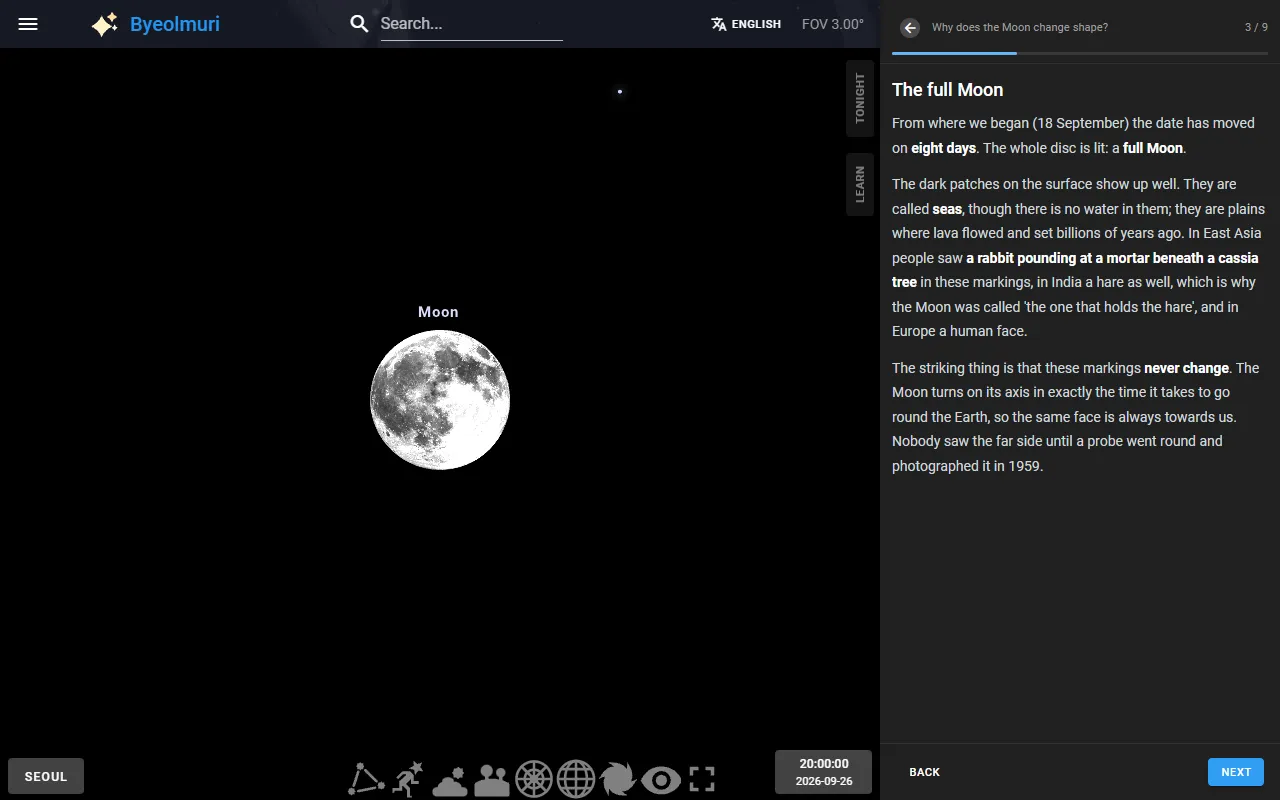
One detail we love: at the crescent step, the lesson says honestly that there is one thing the screen can’t draw. On a real crescent Moon, the dark side glows faintly, lit by sunlight bouncing off the Earth. The lesson calls it a sight to check outdoors rather than on screen.
Every lesson ends outdoors
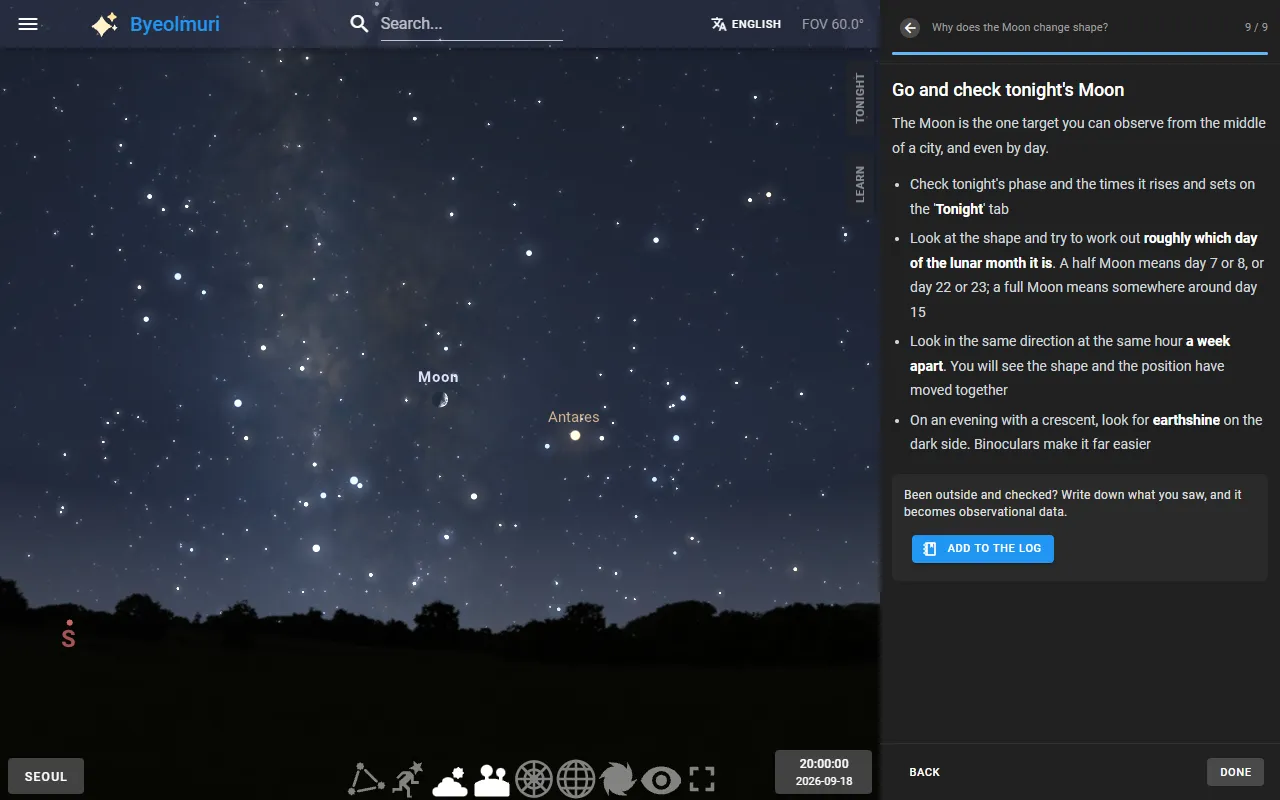
The last step of every lesson is something to do tonight, with your own eyes. For the Moon lesson, that means:
- check tonight’s phase on the Tonight tab
- look at the shape and guess roughly which day of the lunar month it is
- look in the same direction at the same hour a week apart
- on an evening with a crescent, look for the faint glow on the dark side
Been outside? Press Add to the log and write down When, What and What you saw in the Observation Log. The log stays in the browser you used, so press Export as CSV if you’d like to keep a copy.
Make the screen match your sky
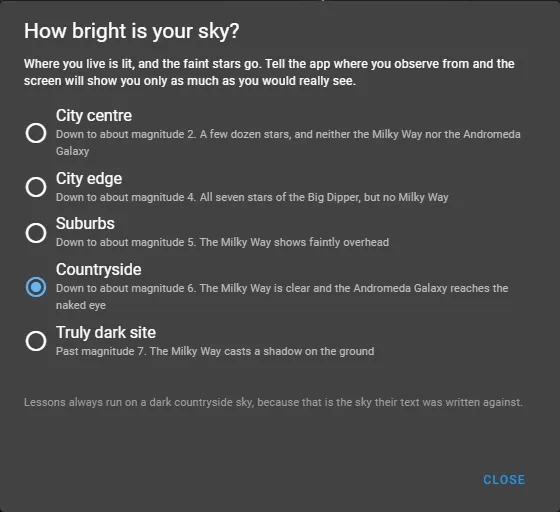
A city sky and a country sky are very different. In the menu, Sky Brightness lets you pick where you observe from, from City centre to Truly dark site, and the screen then shows only as much as you would really see there. That way you don’t go out expecting a country sky and come back having found nothing.
For parents and teachers
Coming up next
Next time we move from the sky to artificial intelligence: AI Teading, a lab where you learn AI by trying it in the browser.
Frequently asked questions
Who is Byeolmuri for?
It's made for ages 11 and up, and for anyone who has learned a constellation from a book and then couldn't find it outside.
Is the sky on screen the sky where I live?
Yes. Byeolmuri draws the real sky for where you are, so what you learn on screen is what you can go out and look for that night.
Can I see the Milky Way from a city?
Usually not. The Sky Brightness menu says so for each kind of place: from the edge of a city you'll see all seven stars of the Big Dipper, but no Milky Way.
Is Byeolmuri an official Stellarium app?
No. It's built on the Stellarium Web Engine, but it is not affiliated with the official Stellarium project.